
Pathologic
Pathologic Wiki Entry
Background
The original Pathologic embodies a unique sense of horror that is incredibly difficult to find in its genre and makes many who play it wonder if games must be fun to be good. Pathologic is a psychological survival horror mystery game renowned for its intense difficulty. Originally released in 2005 by Ice-Pick Lodge, the game has so far seen a HD version and a partial reimagining in its sequel, Pathologic 2. The player takes the role of a doctor from the capital who comes to a rural town to investigate a mystery. While the player conducts their investigation, they must manage their needs and avoid contracting a plague that has infested the town. The game is a harrowing experience, both in gameplay and in story. Despite being relatively unsuccessful, Pathologic is an important part of gaming history and with the release of Pathologic 2, still deserves to be played to this day.
Personal Experience
Having been born in 2001, I would have been a little too young to play this game when it came out. Even if I had been older, given the cult popularity this game possesses, I most likely wouldn’t have found out about it at all if not for the internet. I remember lazily scrolling through videos on YouTube in my late teens when I saw a video from one of my favourite creators that I hadn’t seen yet. It was a review of the HD release of Pathologic by youtuber Mandalore Gaming (Pathologic Classic HD Review). I remember being intrigued by the strange aesthetics and supposedly brutal difficulty. I had always liked survival games where the player had to survive in difficult situations and Pathologic seemed to be right up my alley. However, I was an easily distracted young man with a catalogue of un-played games that had to come first, and I quickly forgot about it. When I was around 20 or so I found out another of my favorite creators had created a video on Pathologic. A youtuber called hbomber guy had done a multiple hour-long analysis of the game (Pathologic is Genius, And Here's Why). Again, I was interested, but there was another piece of information I had missed before, Pathologic had a sequel. Pathologic 2 was essentially a reimagining of the original with better graphics, less bugs, and a less painful gameplay loop. I decided that next time it went on sale I would pick it up. When the time came, I bought the game and promptly put it in my backlog. That was until last year. I finally installed the game and played through the first coupled days. The game was what I expected but that wasn't exactly a good thing. The setting was oppressive, the dialogue was philosophical, and the survival mechanics felt impossible. With university and personal engagements, I felt I didn’t have enough time to dive into the game and uninstalled it. I tried to play it a couple more times but was turned away each time. This may be disappointing for a personal connection section, but I believe this is a very common experience with Pathologic. As of October. 12th 2025 only 37% of players have the achievement for making it to the second day. I am disappointed in myself for not giving it more of a chance, but I am one of the top 14% to have made it to day six. I enjoyed what I did play of the game and will no doubt have to finish it one day, but I believe I should also speak on it now as someone who didn’t make it to the end. So as one of the top 14% of Pathologic 2 players I wholly recommend others play it if they think it would be interesting as you won't be able to tell if you’ll like it until you try it for yourself. If you still don’t trust me, it may be worded better here https://www.rockpapershotgun.com/pathologic-review
Horror Analysis

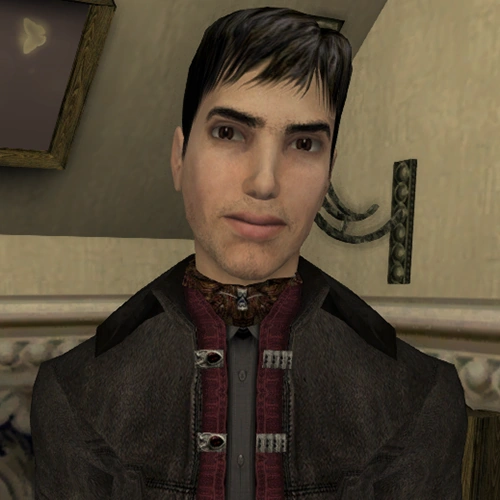
Before the game starts in earnest the player is presented with a choice of two choices of main character. The first character and the recommended starting point for most players is the “Bachelor” Danil Dankovsky. The Bachelor is a medical student from the capital with the incredibly humble goal of defeating death. He is drawn to the town by an old doctor named Isidor Barakh who has lived an unnaturally long time and may hold the key to furthering his research. The Bachelor is a man of science and holds little respect for the people of the Steppe whom he views as superstitious and a hindrance to his goals. Marak (2021) mentions that a major failing of some psychological horror games is not allowing the player to empathize with the playable character. This was especially a problem in first person games like Pathologic. However, the player is able to gain a good understanding of their player character through the dialogue choices offered. For example, the Bachelor’s dialogue options will usually not offer a chance to empathize with the locals or express an opinion that the bachelor himself wouldn’t. Through these interactions the player can learn a great deal about him although empathizing might still be difficult given his nature. Through the Bachelor’s perspective we see the town as a common stereotype of rural living. The local traditions are seen as backwards, and the people are viewed as ignorant (Thurgil, 2020). The Bachelor’s othering of the citizens of this town can also be read as a way of justifying his usage of them to further his own goals which is commonly done by cities to rural towns in the larger scale. As the game progresses the Bachelor sides with the richer citizens of the town who aim to recreate the game into a utopia at the expense of the common citizen (Leiderman, 2016). This is characterized through the existence of the polyhedron. The elites of the town used their resources to create a large tower which seems to float in the air apart from a small ramp which digs into the ground. The Bachelor is fascinated with the logic defying nature of the polyhedron and believes that it will lead to utopia. The first playthrough of the game will likely be as the Bachelor which represents the town as a challenge to be overcome rather than a place where living things live.

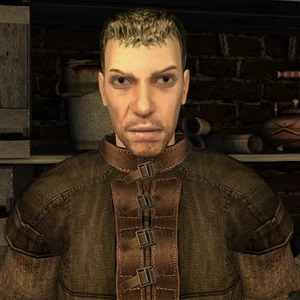
The second character and the recommended second playthrough is the “Haruspex” Artemy Burakh. The Haruspex is the son of the old doctor Isidor Burakh and grew up in the town. He was sent away to the capital to study and become a surgeon but was called back home by a letter from his father. The Haruspex is a local but his time away has led him to be ostracized by the people of the town. He holds respect for the customs of his people but also grounds much of it in the science he has learned. This can be gleaned through much of the dialogue options that are offered in the Haruspex playthrough, which is usually respectful of the traditions if not a bit suspicious or their actual truth. Through the Haruspex’s eyes we learn much of the traditions and practices of the Steppe which helps to remove some of the stigma common in folk horror (Thurgil, 2020). The player even uses this knowledge to create medicine and cures for the plague that are usually just as, if not more effective than the Bachelor’s. Instead of the folk horror experience with the Bachelor’s play through, we are left to fear the elites of the town and the encroachment of hostile outsiders attempting to destroy the only things keeping us alive. As the Haruspex the player becomes the folk in folk horror.

As the game progresses, the new plague infecting the town gets worse and forces the player into increasingly difficult conditions. It starts with the quarantine of one of the town's districts which has fallen to the plague. Clouds of black plague particles float around the streets of this area. The citizens that lived there wander the streets, wrapped in sheets and reaching for you to help them. If either manages to touch the player, they have a chance to spread the plague. Just being in the area will cause the player’s immunity to drop slowly over time. To slow down the infection the player can buy protective gear like masks and gloves from vendors. Unfortunately, as the plague progresses through the town, the prices of items like food and medical supplies become absurdly expensive. Much of the time the player will have to choose whether they wish to buy protective gear or food (Novitz, 2017). Unlike many horror games, the economy is a central mechanic and is integral to the horror (Novitz, 2016). The plague burns through the town until eventually the military is brought into the picture. As long as the player has done a good enough job, they are allowed to convince the military to use their plan which will depend on which character was chosen. The Bachelor decides that the town is a lost cause but decides to save the polyhedron which he believes must be preserved at all costs (Leiderman, 2016). The Haruspex on the other hand, learns that the polyhedron is most likely the cause of the plague and decides to destroy the polyhedron to save the people. Not offering the decision to the player may seem odd but this decision serves to further flesh out the player characters as their own people. Both play throughs offer their own unique take on the same situation and uniquely to most of the horror genre, changing the type of horror based on the character’s perspective. The game provides a unique economy-based horror experience that will make the player suffer, as well as ponder deep philosophical concepts.
Scholarly References
Marak, Katarzyna. “‘IF THE DOG DIES, I QUIT’: BLAIR WITCH AND THE PROBLEMS OF CONTEMPORARY PSYCHOLOGICAL HORROR GAMES.” Studia Humanistyczne/Studia Humanistyczne AGH, vol. 20, no. 2, 2021, pp. 57–70, https://doi.org/10.7494/human.2021.20.2.57.
Novitz, Julian. "‘Adam Smith Hates Your Guts’: Horror, Survival and the InGame Economy in Pathologic.", 2016.
Leiderman, Daniil. "Zombies, russians, plague: Eastern Europe as a sandbox for utopia." Digital Icons 15, 2016: 21-36.
Novitz, Julian. "Scarcity and Survival Horror: Trade as an Instrument of Terror in Pathologic." Transactions of the Digital Games Research Association 3, no. 1, 2017.
Thurgill, James. "A fear of the folk: On topophobia and the horror of rural landscapes." Revenant: Critical and Creative Studies of the Supernatural 5, 2020: 33-56.
Non-Scholarly References
“Pathologic Wiki.” Pathologic Wiki. Accessed September 29, 2025. https://pathologic.fandom.com/wiki/Pathologic_Wiki.
https://youtu.be/HeK36g92zjo - “Pathologic Classic HD Review” by Mandalore Gaming
https://youtu.be/JsNm2YLrk30 - “Pathologic is Genius, And Here's Why” by hbomberguy
No AI was used in the production or research of the work.